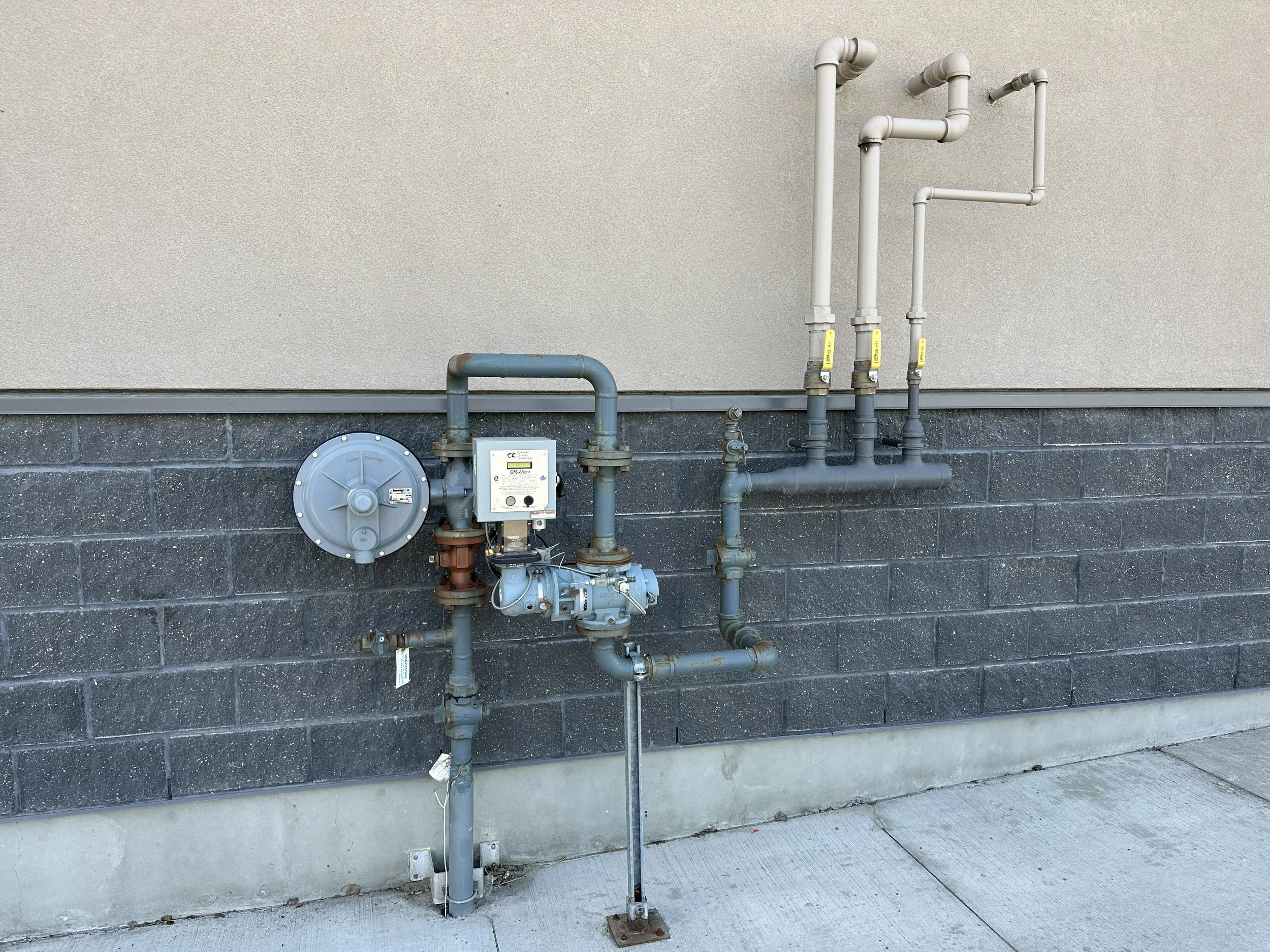
Natural gas moves through a network of pipelines, distribution facilities, and meters before reaching homes and businesses across Calgary. Along the way, small amounts of methane can be released through normal operations, equipment venting, and leaks.
CURMET is measuring methane at different points across this network, from large distribution facilities to residential gas meters. This research helps us understand where methane is released, how much is emitted, and where opportunities exist to reduce emissions.
Natural Gas Transmission and Distribution
Natural Gas Distribution
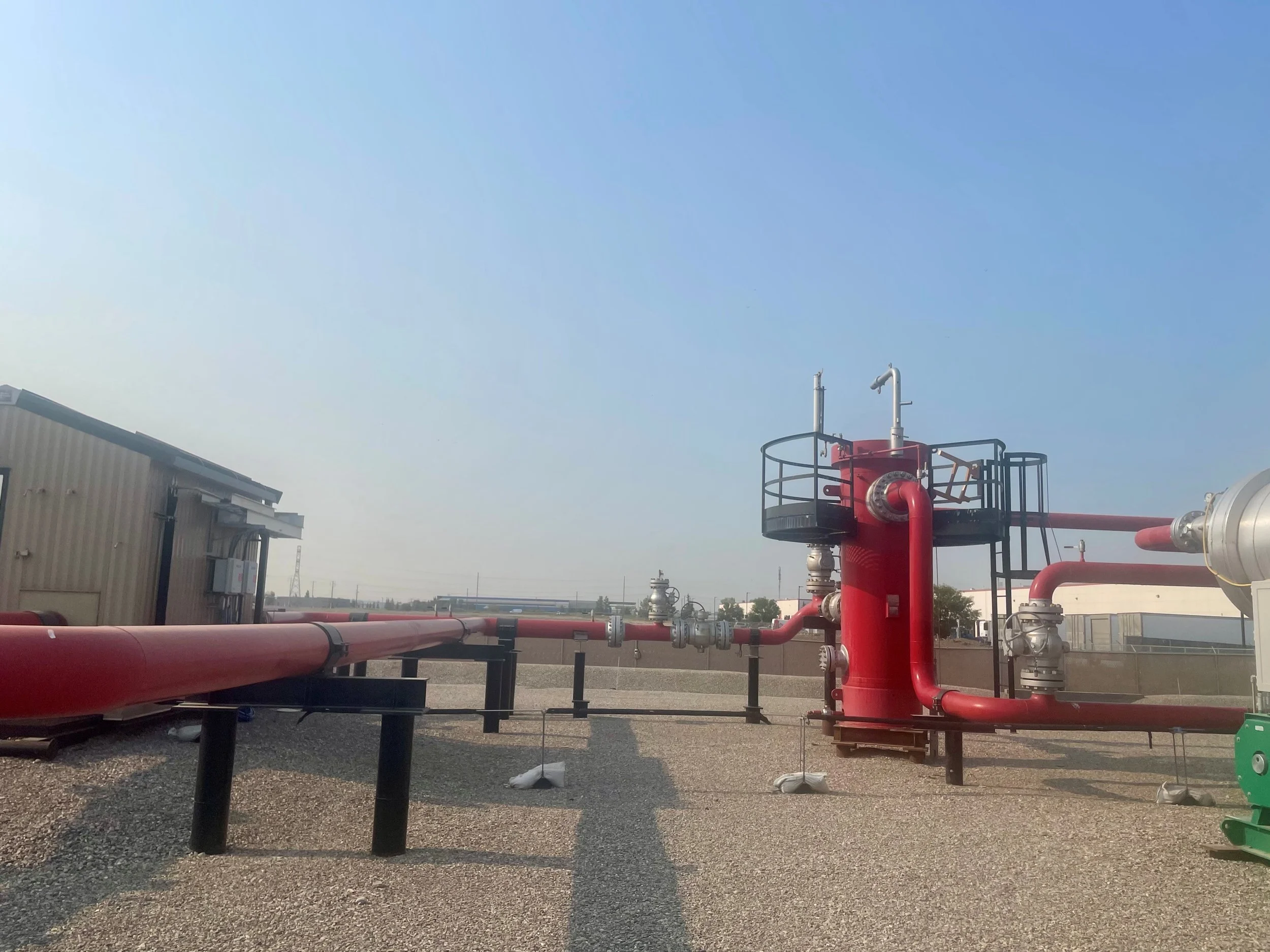
Natural gas distribution facilities reduce and regulate the pressure of natural gas before it is delivered to homes, businesses, and industries. Methane can be released at these facilities through intentional venting, equipment leaks, and incomplete combustion.
In collaboration with Calgary’s local natural gas distributor, CURMET is measuring methane emissions at several facilities across the city. We use measurements at both individual equipment and whole facility scales to understand where methane is released, how emissions change over time, and how different measurement methods compare.
This research can help identify the most important emission sources and opportunities to reduce methane from urban natural gas infrastructure.
Project lead: Coleman Vollrath
Publications
Vollrath CP, Hugenholtz CH, Barchyn TE, Wearmouth C. 2026. Multi-scale measurements and temporally resolved modeling of methane emissions at natural gas distribution stations. EarthArxiv. https://doi.org/10.31223/X57R39
Residential Natural Gas Meters
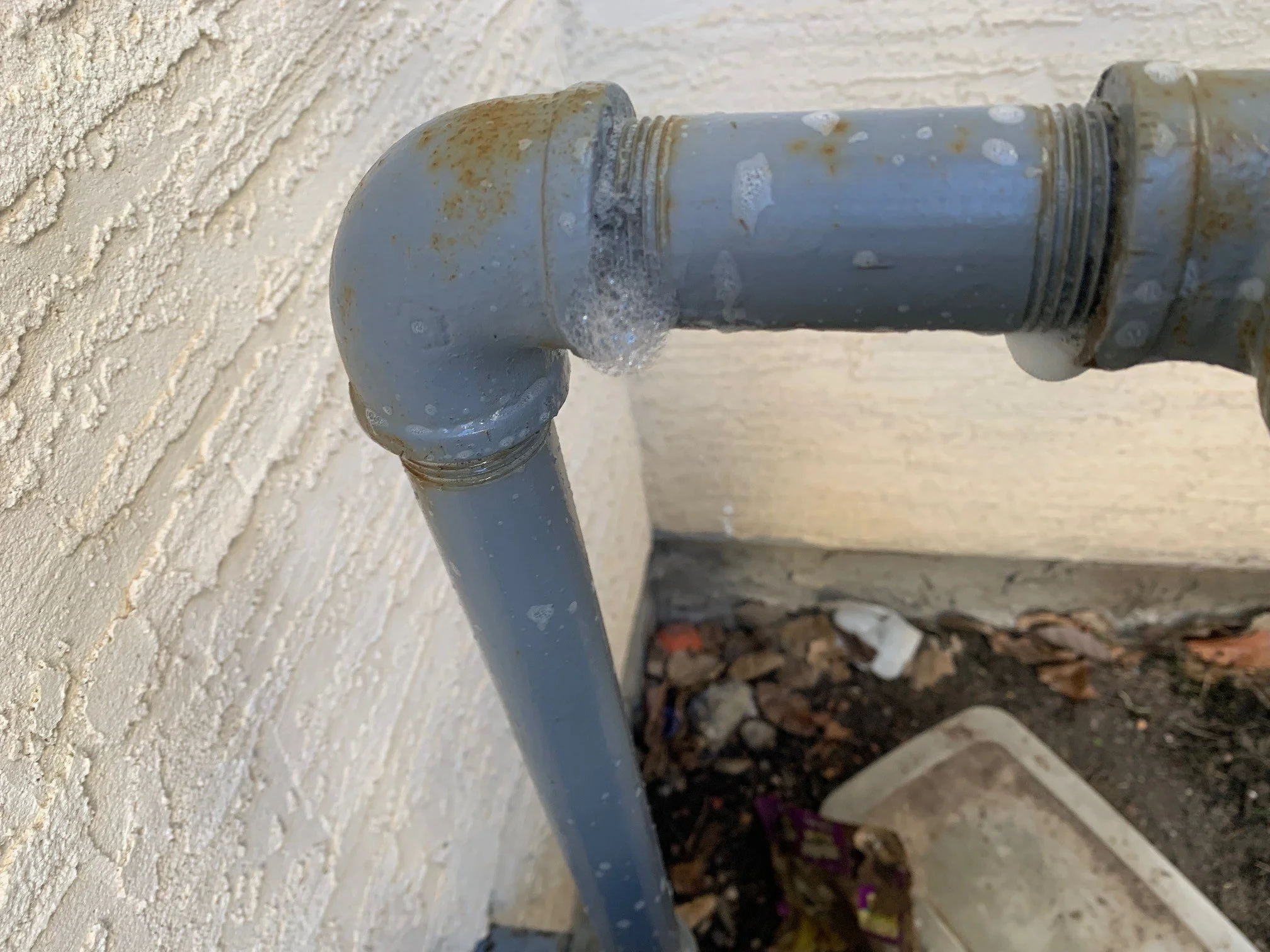
Natural gas is widely used to heat homes in Calgary. Before entering a home, gas passes through a meter that measures use and regulates pressure. These meters can release small amounts of methane through normal operation or equipment leaks. With hundreds of thousands of meters across Calgary, these small releases can add up.
CURMET measured methane emissions from 37 residential gas meter assemblies in Calgary. Methane was detected at every meter studied, mostly from normal operation, with a small number of leaks also identified.
Our measurements were higher than previous estimates, suggesting that residential gas meters may contribute more methane than currently represented in emissions inventories.
Project lead: Coleman Vollrath
Publications
Vollrath, C., Hugenholtz, C.H., Barchyn, T.E., Wearmouth, C. 2024. Methane emissions from residential natural gas meter set assemblies. Science of The Total Environment 931, 172857. https://doi.org/10.1016/j.scitotenv.2024.172857.
How we measure natural gas transmission and distribution sites