Wastewater Treatment
Urban waste management includes more than solid waste. Sewer systems, wastewater treatment facilities, and biosolids management can all produce methane as organic material breaks down.
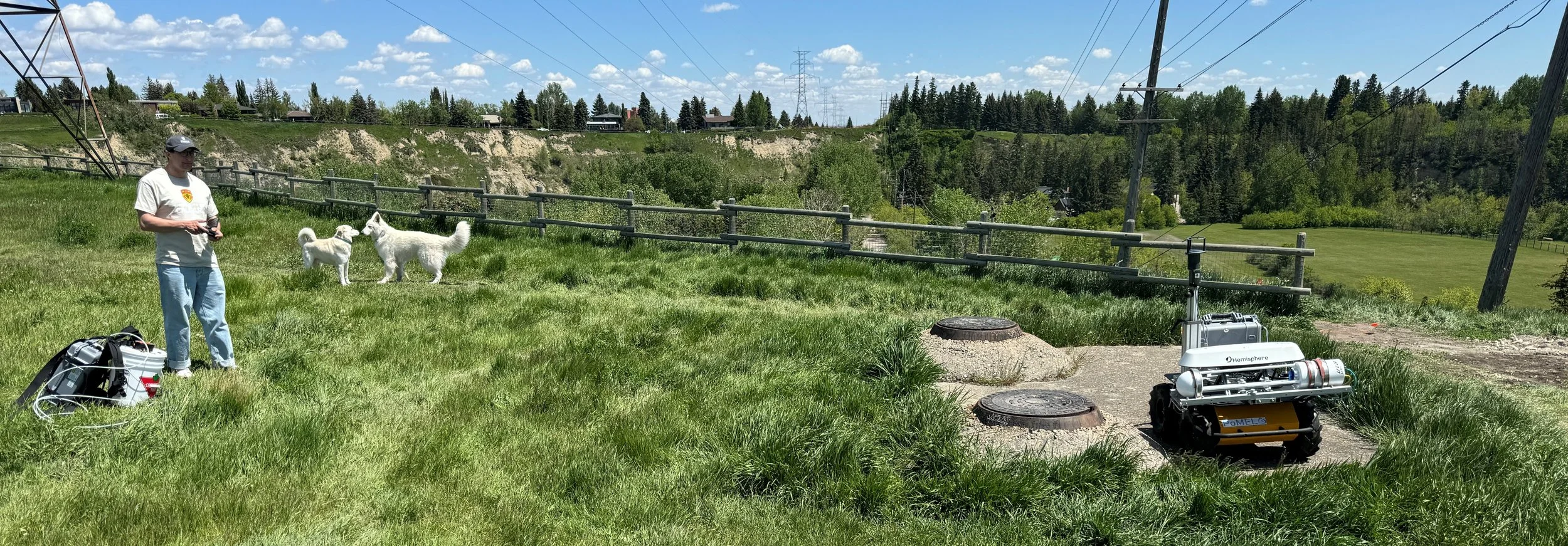
CURMET measures methane across different parts of the wastewater system to better understand where emissions occur, how much is released, and which processes contribute the most. This helps identify sources that may be overlooked in traditional emissions inventories and opportunities to reduce emissions.
Sewers
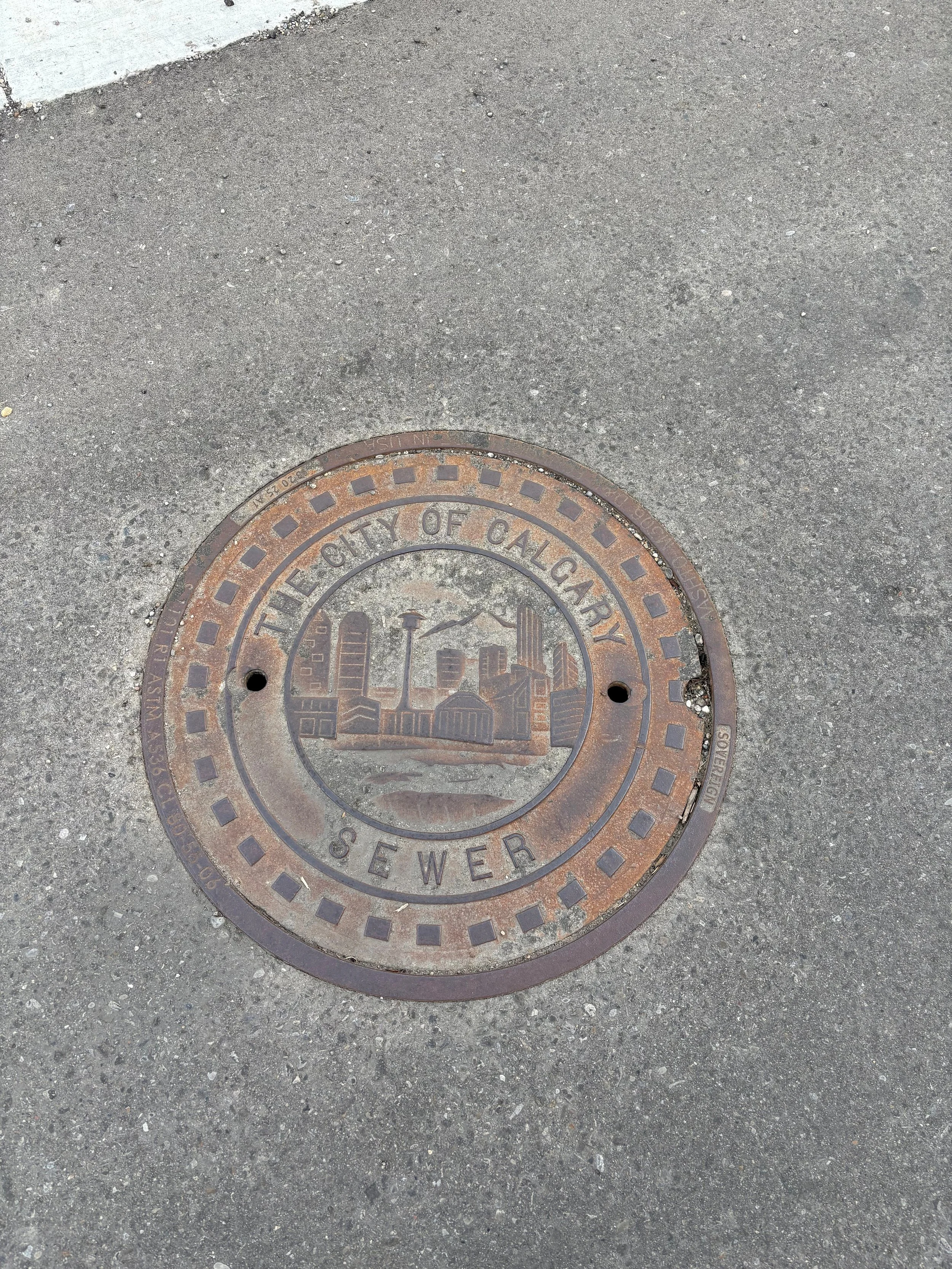
Wastewater treatment facilities are known sources of methane, but less is known about emissions from the sewer systems that carry wastewater to treatment plants.
Methane produced within sewers can escape through access points such as manholes. In a large city like Calgary, tens of thousands of these access points are spread throughout the city, creating many potential emission sites.
CURMET is measuring methane at hundreds of randomly selected sewer access points across Calgary. These measurements will help determine how much sewers contribute to the city’s overall methane emissions and whether they represent an important opportunity for mitigation.
Project lead Joseph Samuel
Publications
Samuel, Joseph, 2025, Dataset of "Methane emission measurements from sewer covers in Calgary", https://doi.org/10.5683/SP3/UNPRNC.
Samuel, Joseph, and Hugenholtz, Chris H., 2026, “Methane emissions from sewer covers: A case study of Calgary’s wastewater collection system”, https://doi.org/10.1080/10962247.2026.2624095.
Wastewater treatment facilities
Wastewater treatment facilities are an important source of urban methane. Understanding where methane is released, how much is emitted, and which treatment processes produce it can help identify opportunities to reduce emissions.
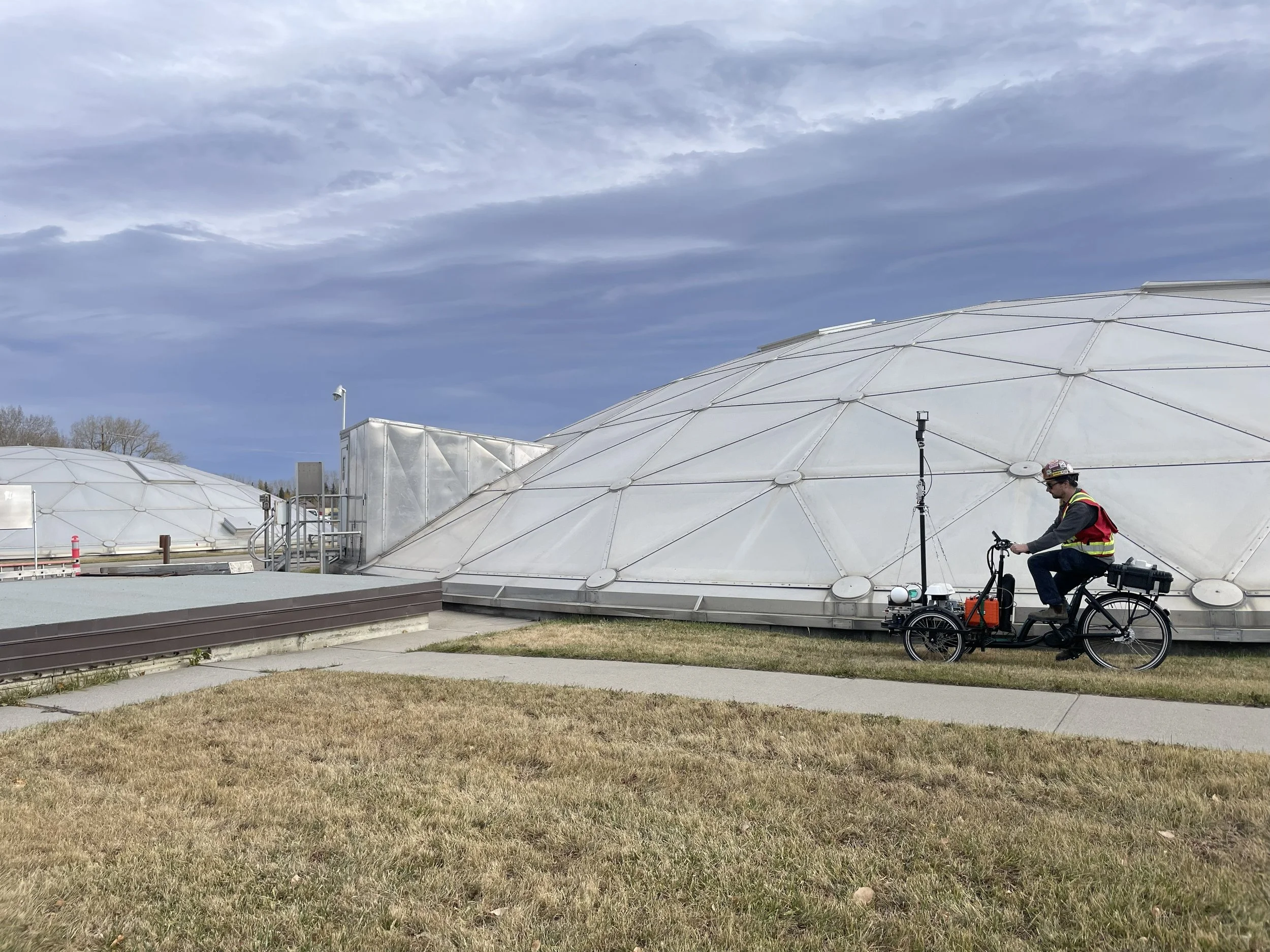
Calgary’s three major wastewater treatment facilities provide an opportunity to study methane across a range of treatment processes. CURMET uses vehicles, eBikes, handheld sensors, and optical gas imaging to map methane emissions and identify both expected and unexpected sources.
These measurements will help us better understand methane emissions from wastewater treatment and identify opportunities for improved operations and methane reduction.
Project lead Thomas Barchyn and Zhenyu Xing
Publications
In progress
Biosolids lagoons
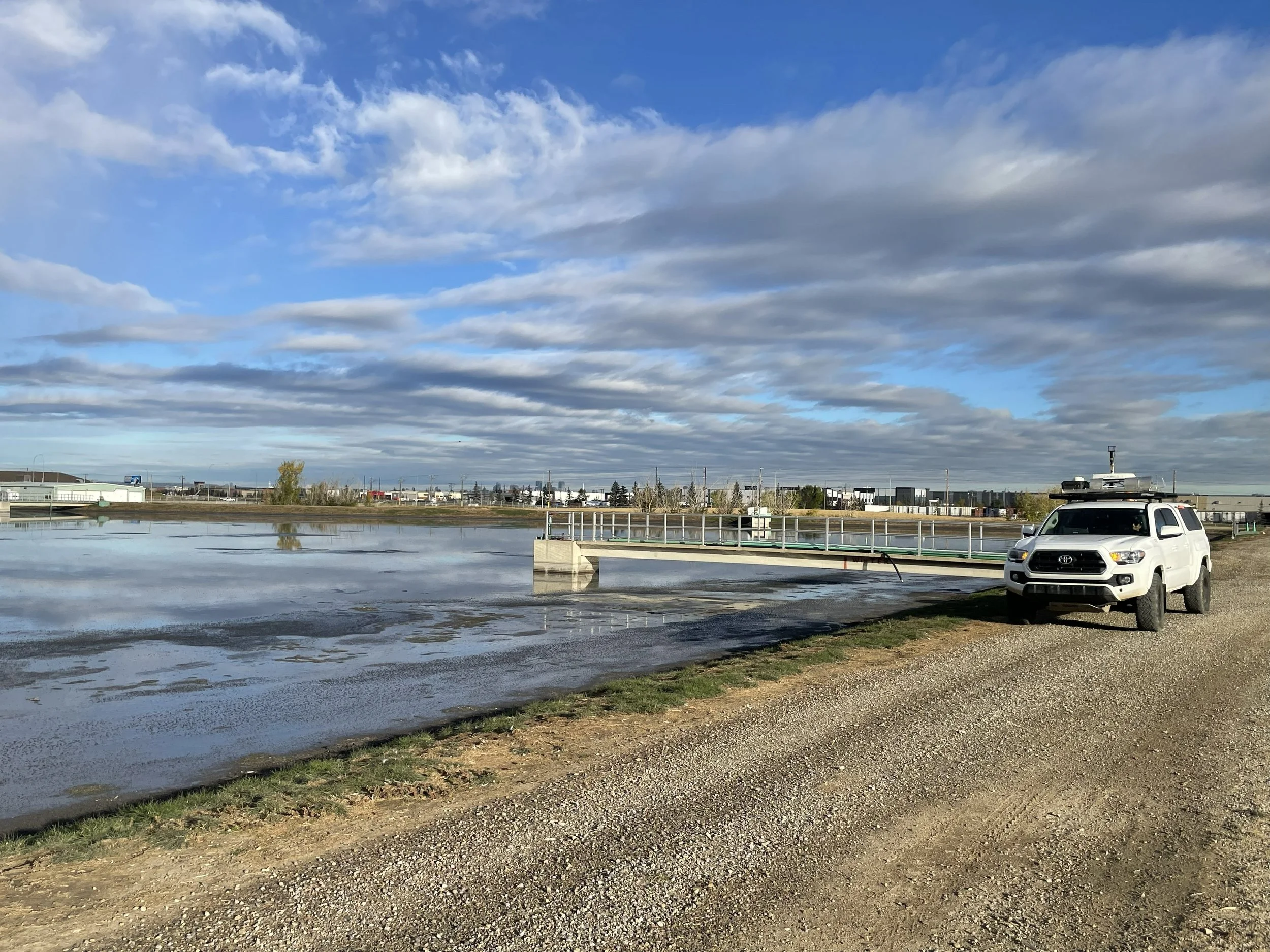
Biosolids are produced during wastewater treatment and can be used as fertilizer on agricultural land. In Calgary, part of this process involves dewatering biosolids in dedicated lagoons, where methane can be released.
CURMET measurements show that methane emissions from these lagoons vary across the site and over time. We are using vehicle based methane measurements and plume mapping to identify the largest sources and estimate how much methane is being released.
This research will improve our understanding of a poorly studied urban methane source and help identify opportunities to better manage and reduce emissions.
Project lead Zhenyu Xing
Publications
In progress
How we measure wastewater treatment facilities